
The Vaccine News That Really Matters
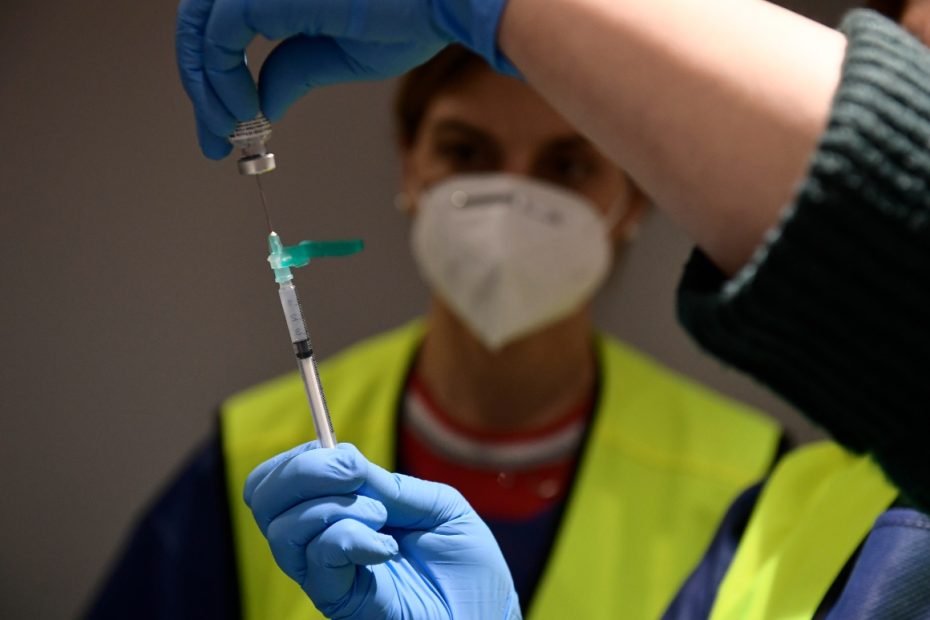
Before COVID-19 upended our lives, clinical vaccine trials typically made news only when they were done—when scientists could definitively say, Yes, this one works or No, it doesn’t.
After years of dodging questions and pretending not to read his tweets, some GOP senators are speaking out against Trump as Election Day draws near.
As President Trump campaigns in swing states that are also coronavirus hot spots, The Intercept’s Jeremy Scahill argues he is directly responsible for the poor U.S. response to the coronavirus pandemic, which has killed almost 220,000 people in the country so far and sickened millions. “I don’t know how else to describe what Trump has done except homicidal,” says Scahill, host of a new seven-part audio series that examines the Trump era.
Donald Trump ran for president in 2016 with a mixed message of attacking the legacy of the Iraq War and U.S. military adventurism, while simultaneously pledging to commit war crimes and promote imperialism. As we look back at Trump’s record, Jeremy Scahill, co-founder of The Intercept, says his flouting of international norms and bullying of other countries is in keeping with how U.S. presidents have long behaved. “Donald Trump is not the root of the problem.
In Part 2 of our discussion of the Trump era with The Intercept’s Jeremy Scahill about his new seven-part audio documentary “American Mythology,” he examines how Trump’s xenophobic immigration policies have been a “methodical, surgical operation” to make life miserable for both current and prospective immigrants, including asylum seekers fleeing violence.
As the 2020 presidential campaign enters its final two weeks, we look at the past four years of the Trump presidency with investigative journalist Jeremy Scahill of The Intercept. His podcast “Intercepted” has just released the fourth chapter in a seven-part audio documentary titled “American Mythology,” which critically examines the Trump presidency and places it within a larger historical context.
Parenting advice on mask disagreements, essay troubles, and property damage.
It’s a policy reversal from a presidency that helps red states and harms blue ones.
Democrats want it. The president wants it. Americans need it. If GOP senators want to kill it, they can own it, too.
The Trump administration’s logic for ending the count early obscures that it may be rife with inaccuracies.
There won’t be a coronavirus vaccine ready before Election Day, despite President Donald Trump’s repeated promises and vaccine makers’ breakneck speed.
Two national pharmacy chains will administer an eventual coronavirus vaccine to high-risk groups.
The move by Pfizer continues the company’s push to publicly distance itself from the presidential race.
“I think we should be even more affirmative about it,” the former New Jersey governor said.
The political backdrop could make the first coronavirus gathering of the advisory committee one of the most-watched in FDA history.
Covid isn’t just disproportionately killing people of color; it’s sticking them in a feedback loop that exacerbates economic and racial inequity, says Chicago economist Damon Jones.
Government spending exceeded more than $6.5 trillion in the fiscal year that ended on Sept. 30, up from $4.4 trillion in fiscal 2019.
Some 60 percent of all U.S. businesses that have closed during the pandemic have not reopened.
The comments from the leading Fed officials were the latest evidence of the central bank’s growing attention to persistent inequality in the economy.
During confirmation hearings this week for Supreme Court nominee Amy Coney Barrett, Democratic Senator Sheldon Whitehouse of Rhode Island opted not to ask the judge any questions. Instead, he gave a 30-minute presentation on how right-wing groups, including the Federalist Society and Judicial Crisis Network, use dark money to shape the nation’s judiciary.
The Senate Judiciary Committee heard testimony this week from Crystal Good, who spoke about her experience of having an abortion and expressed concerns that Amy Coney Barrett’s confirmation to the Supreme Court would limit access to safe, affordable care. During three days of hearings, Judge Barrett has repeatedly refused to answer questions about her views on abortion and the future of Roe v. Wade, despite her public record opposing reproductive rights.
The Senate confirmation hearing for President Trump’s Supreme Court nominee Amy Coney Barrett ended Thursday with Republicans on the Judiciary Committee scheduling a vote on her nomination for October 22, with a full Senate vote to follow shortly thereafter — less than two weeks before the presidential election, in which the Supreme Court could play a decisive role.
We air highlights from the second day of questioning of President Trump’s Supreme Court nominee Amy Coney Barrett, who faced eight hours of questions on Wednesday about her views on issues ranging from climate change to voting rights to gay marriage and abortion, as Republicans race to confirm her ahead of the election and secure a 6-3 majority on the Supreme Court for conservatives.
As a direct result of being a Trump-backing toady, Texas Republican Sen. John Cornyn, a hack during the best of times, is in serious danger of losing his seat to Democratic opponent MJ Hegar in the November elections. In an attempt to stanch the bleeding, Cornyn met with the Fort Worth Star-Telegram’s editorial board to (ahem) explain himself.
The Trump administration is a disaster. It was a garbage fire when it began, but that ongoing fire, stoked by the entire Republican Party, has led to an increase in authoritarian use of law enforcement and ICE forces to dehumanize people all across our country.