
Today's Liberal News

Treat AI Like a Normal Crisis

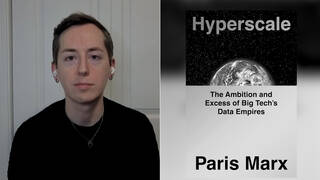
One 27-year-old quit his job, and everybody (including but not limited to the singer-songwriter Sheryl Crow) appears to have lost it.
The past two weeks have been dizzying. The 27-year-old, Jacob Coxon, a former researcher at Anthropic, went public with an alarming allegation: That the people inside Silicon Valley’s leading AI companies truly believe their products might pose an extinction level threat to humanity. This claim isn’t exactly new.

Kara Swisher: AI Isn’t Going to Destroy Humanity—But the People Building It Might

As the AI industry likes to tell it, superintelligent bots could one day cure cancer and end poverty. Or in the worst-case scenario, they might wipe out all humans from the face of the Earth. In recent weeks, Silicon Valley’s existential concerns about the technology it is racing to build have blown up. The tech journalist Kara Swisher sees it differently. “We have to stop thinking AI is going to kill humanity,” she told Atlantic executive editor Adrienne LaFrance at The Atlantic Festival.

What AI Anxiety Looks Like in China

Anxiety about AI in the United States appears to be getting worse. Prosaic concerns about machines disrupting industries, stealing jobs, and compromising schoolwork are giving way to more harrowing fears about the end of humanity.  
Even after top AI executives in the U.S. called for slowing down the breakneck pace of development, President Trump dismissed these safety concerns as a “hoax” that would hand China an advantage in the race for AI supremacy.

Emily Wilson Can’t Let The Odyssey Go

Emily Wilson has become the most famous living translator of the Homeric epics. Her 2017 The Odyssey, the first major translation of the poem into English by a woman, has sold more than 1 million copies. (Her Iliad translation came in 2023.) And this summer, she found herself right at the center of cultural discourse after she drew her sword and published a scathing review of Christopher Nolan’s blockbuster adaptation of the ancient work.

The Republicans Distancing Themselves From Trump

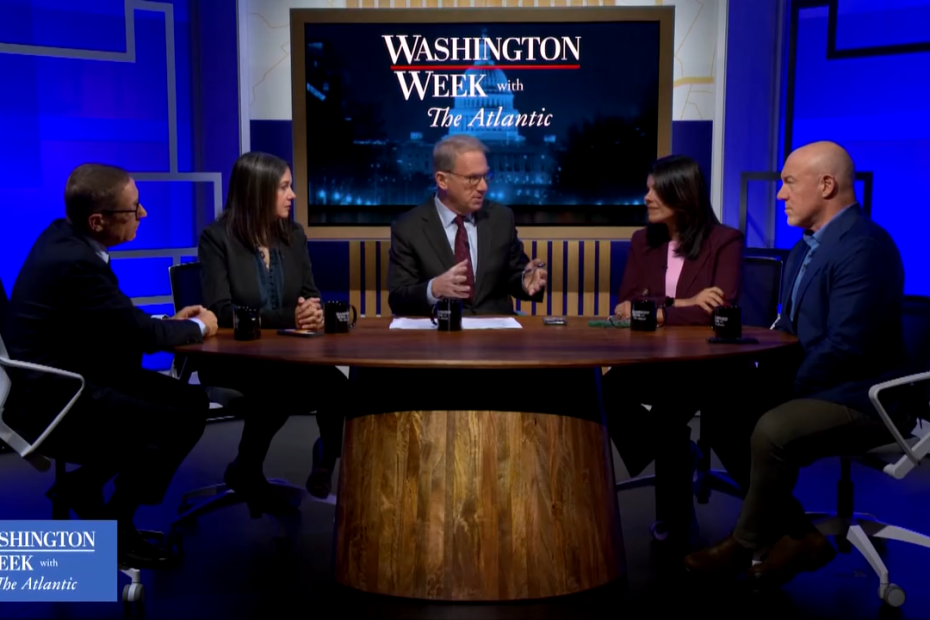
Editor’s Note: Washington Week With The Atlantic is a partnership between NewsHour Productions, WETA, and The Atlantic airing every Friday on PBS stations nationwide. Check your local listings, watch full episodes here, or listen to the weekly podcast here.
With less than two months until the midterm elections, some Republican lawmakers appear to be distancing themselves from President Trump and his most controversial policies.

“Call It Evil”: Philosopher Susan Neiman on Why Moral Clarity Matters in the Trump Era

We speak with moral philosopher Susan Neiman, author of the new book Call It Evil: Understanding the Trump Era. Neiman argues that evil — far from being an outdated religious concept — is a vital way to understand how injustice works in the world. The Trump administration’s abusive policies have been aided by a general reluctance to call them out as evil, part of how people are “brainwashed … by the idea that morality is for losers, suckers, fools,” she says.

The Greenland Fiasco Stumbles to an End

Jesper Møller Sørensen, the Danish ambassador to Washington, projected an air of calm. He was serving hors d’oeuvres, including reindeer sausage and smoked salmon, at his residence, where American, Danish, and Greenlandic guests had gathered for a Wednesday event billed as “A Taste of the Arctic.” On the terrace, he told me that months-long discussions about the future of Greenland were heading in a good direction. But, he warned, the outcome would depend on whether one person could be swayed.

Speak at Your Own Risk

On the first day of his second term in the White House, President Trump signed an executive order on free speech stating that his administration would ensure that “no Federal Government officer, employee, or agent engages in or facilitates any conduct that would unconstitutionally abridge the free speech of any American citizen.” He has gone on to violate that order many times.

Can the Never-Trump Coalition Last?

This is an edition of The Atlantic Daily, a newsletter that guides you through the biggest stories of the day, helps you discover new ideas, and recommends the best in culture. Sign up for it here.
George F. Will joined The Washington Post when Richard Nixon was president, and he’s been espousing the same cerebral brand of conservatism twice a week ever since. His record doesn’t leave much room for surprise.

Researchers Say They’ve Found the Truth About Thomas Jefferson

Three hours after Thomas Jefferson died at his Monticello home on July 4, 1826, his personal secretary, Nicholas Trist, snipped a lock of the Founder’s gray hair, still faintly reddish blond. Trist then tied the hair with orange thread and placed it in a paper packet, along with a short note describing what he’d done.
In an era before photography or modern embalming, hair was an easily preserved reminder of a beloved friend or relative who’d died.

The Michael Kelly Award from The Atlantic is Awarded to Drew Philp for “There Will Be No Mercy” published in The Atavist Magazine

Drew Philp is the winner of the 23rd annual Michael Kelly Award, given by The Atlantic, for his investigative feature “There Will Be No Mercy,” published by The Atavist Magazine in 2025. Philp’s harrowing exposé of Ethiopia’s civil war serves as the definitive account of the two-year conflict, considered one of the deadliest of this century.
The award was announced this morning at The Atlantic Festival in New York City.

“We Are the 99%”: 15 Years Later, Occupy Wall Street’s Impact Is Still Being Felt

Fifteen years ago this week, thousands of activists marched on the Financial District in New York City. They formed the Occupy Wall Street encampment in Zuccotti Park, launching a movement focused on economic inequality that spread across the nation and globe under the slogan, “We are the 99%.” Protesters would go on to sleep in Zuccotti Park for nearly two months before police raided the encampment.