CDC panel announces plans to assess childhood vaccines
The group of outside experts will also consider shot ingredients like aluminum, as well as the timing and order of vaccines, according to a document posted on the agency’s website.
Israeli forces have abducted over 500 peace activists over the past week who were sailing to Gaza in an effort to deliver humanitarian aid to the besieged territory. Organizers of the Global Sumud Flotilla say most of the participants were sent to Ktzi’ot Prison, notorious for harsh and abusive conditions. Some have reported physical abuse, humiliation and inhumane treatment by Israeli soldiers.
President Donald Trump says Israel and Hamas have agreed to the “first phase” of a U.S.-backed ceasefire deal for Gaza. The 20-point roadmap includes a swap of captives and a phased Israeli withdrawal from the Gaza Strip, though details on many of the planks remain sketchy. Democracy Now! spoke with Palestinian and Israeli analysts on how to interpret the peace plan.
“We’re now at a fork in the road,” says Mouin Rabbani, a Palestinian Middle East analyst.
Celebrations broke out in Gaza and Israel overnight after President Trump announced Israel and Hamas have agreed on the first phase of a hostage-ceasefire deal. Trump said the remaining Israeli hostages held in Gaza would likely be released on Monday. Israel has also agreed to release hundreds of Palestinians held captive in Israeli prisons, but a final list of prisoners has not been released.
It began in 2008—and has only proliferated from there.
Trump is bailing out his buddy Javier Milei and Republicans aren’t happy.
Doug Woodham joins Felix Salmon to discuss his book Jean-Michel Basquiat: The Making of an Icon.
NVIDIA has announced a $100 billion investment in OpenAI to build out data centers that use its chips.
The YIMBY movement gathered in New Haven—and revealed its biggest vulnerability.
The Trump administration’s move formalizes advice to soften or eliminate previous policies.
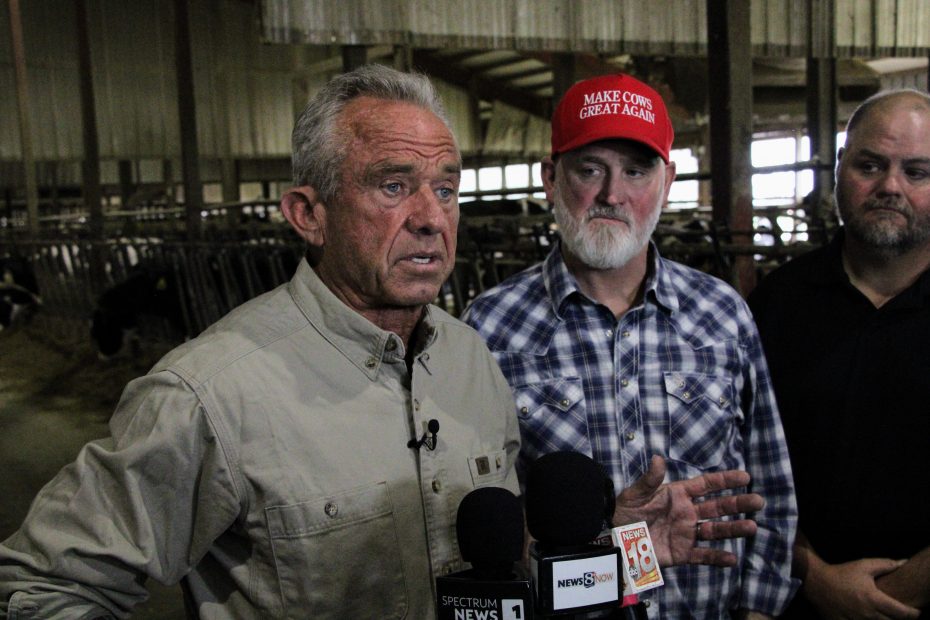
The health secretary has made phasing out animal testing part of his Make America Healthy Again plan.
Rural areas that overwhelmingly voted for the president employ a high concentration of doctors on H-1B visas.
The agency’s decision has drawn conservative criticism.
The Waves also discusses the Riverside Church controversy and the case of Sarah Milov.
What we say matters, especially depending on whom we say it to.
The Waves also discusses the case against Jeffrey Epstein and Taffy Brodesser-Akner’s Fleishman Is in Trouble.
Trump’s strength with Republicans on the economy could prove to be a boon for the GOP.
A survey from the liberal-leaning group Somos Votantes shows Latino voters are souring on the president.
Privately, aides concede voters remain uneasy about prices but argue their policies are beginning to turn things around.
When Donald Trump brokered the Abraham Accords in his first term, he heralded the normalization agreements between Israel and several Arab states as “the foundation for a comprehensive peace across the entire region.” In truth, the Accords were a diplomatic handshake between countries that had never fought a war. They did not resolve the region’s conflicts, and were not the seismic achievement that Trump presented them to be.
If the secret to understanding a strongman is to identify his greatest weakness, one place to start with Donald Trump is his obsession with his own eventual obituaries. Trump knows that they will mention his history-making presidencies, his ostentatious wealth, and his unusual charisma—but he also is aware that when he dies, people will remember his conviction on 34 felony counts, and that there is nothing he can do about it.
The panel voted to undo an action by Health Secretary Robert F. Kennedy Jr. which removed the vaccine from the immunization schedule for pregnant women.
As far as government shutdowns go, this one has so far lacked the round-the-clock chaos of its predecessors. There have been no dramatic late-night clashes on the floors of Congress, no steep stock-market plunges driven by panicked investors, no prime-time presidential addresses from the Oval Office. Even the running clocks on cable-news chyrons have disappeared.
This is an edition of The Atlantic Daily, a newsletter that guides you through the biggest stories of the day, helps you discover new ideas, and recommends the best in culture. Sign up for it here.
The winter of early 1981 was a simpler time, a gentler time. Like so many college students, I was watching Saturday Night Live in the living room of my small dorm when the SNL cast member Charles Rocket dropped an f-bomb on live television. I looked around at my fellow students.
Updated with new questions at 4:10 p.m. ET on October 8, 2025.
Welcome back for another week of The Atlantic’s un-trivial trivia, drawn from recently published stories. Without a trifle in the bunch, maybe what we’re really dealing with here is—hmm—“significa”? “Consequentia”?
Whatever butchered bit of Latin you prefer, read on for today’s questions. (Last week’s questions can be found here.)
To get Atlantic Trivia in your inbox every day, sign up for The Atlantic Daily.
He built a sports empire on ESPN. Now he wants to see if it’ll win him an Alabama Senate seat.
The new documentary Stripped for Parts: American Journalism on the Brink looks at how hedge funds have gutted newsrooms across the country. The hedge fund strategy of “distressed asset investing” involves buying up industries that are struggling to turn a profit, and then selling off their assets and laying off workers. “You have people who are interested solely in making money off of the newspapers and not in serving the community and doing good journalism,” says director Rick Goldsmith.
We speak to journalist David Klion about the Trump-affiliated right wing’s increasing grip on mainstream news media, as “anti-woke” pundit Bari Weiss takes the helm as the new editor-in-chief of CBS News.