
Today's Liberal News

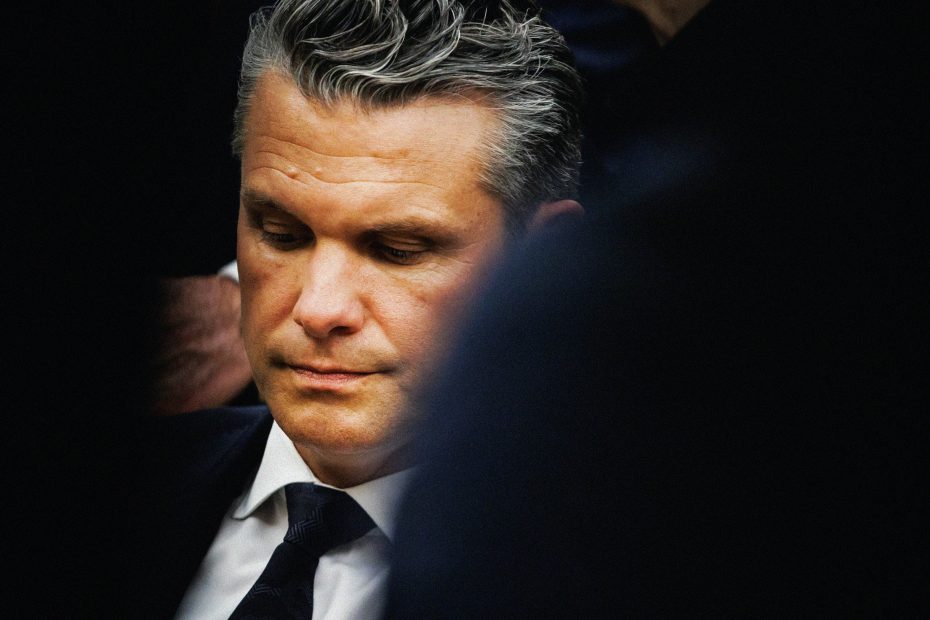
Pete Hegseth Treats Fallen American Soldiers as a PR Problem

This is an edition of The Atlantic Daily, a newsletter that guides you through the biggest stories of the day, helps you discover new ideas, and recommends the best in culture. Sign up for it here.
The United States is at war. Americans, at such a time, might expect their government to speak to them regularly and report on U.S. goals—and casualties—but so far, they have gotten little beyond prerecorded videos of the president and some sound bites from various officials.

The American King Goes to War

America has been at war for nearly a week, but the president who started the war can’t explain why.
Either Iran’s nuclear program needed to be destroyed because Iran was “probably a week away” from having the material for a bomb, according to the Trump adviser Steve Witkoff, or Iran was “not enriching” uranium, according to Secretary of State Marco Rubio, or maybe Iran was threatening the United States and its allies bases in the region, according to Defense Secretary Pete Hegseth.

Tesla’s Secret Weapon Is a Giant Metal Box

Elon Musk’s vision for the future of Tesla has finally rolled off the assembly line. Last month, a Tesla factory in Texas built the first Cybercab, a driverless electric car with neither a steering wheel nor pedals. With typical bombast, Musk has promised that the Cybercab will cost less than $30,000 by next year, and said that it could perhaps even pay for itself: Owners will conceivably be able to nap at home while the car is out hailing riders and earning them money.

“Utter Disaster for All Involved”: Is Trump’s War on Iran Repeating Bush’s “Forever War” in Iraq?

As Iranian missiles strike military, residential and economic targets in neighboring Gulf states, we speak to Al Jazeera’s senior political analyst Marwan Bishara in Doha, Qatar. Bishara says Iran’s targeting of U.S. allies in the region may be an Iranian calculation that there is “a cost to be paid for American interests” as Saudi Arabia, the UAE and other regional powers are forced to respond to an “Israeli war of choice.” Meanwhile, says Bishara, the U.S.

“Iran Is Not Going to Surrender”: Johns Hopkins Prof. Says U.S. and Israel Underestimate Iran

The U.S.-Israeli war on Iran is now in its fifth day. Following the assassination of Supreme Leader Ali Khamenei, Israel has made it clear that it intends to target any official successors. Observers also warn that Israel could soon deploy its “Dahiya doctrine,” a military strategy it first developed in Lebanon that involves carpet-bombing densely populated residential areas. Despite U.S.

Who Bombed Girls’ School in Iran? Reporter Nilo Tabrizy on What We Know About Massacre, 175 Killed

After a strike on a girls’ elementary school in Minab, Iran, killed at least 175 people, nearly all young schoolchildren, online reports spread disinformation about the attack, including claims that the Iranian government itself had bombed the school. Journalist Nilo Tabrizy describes how outside reporters have been able to verify the attack despite Iran’s internet blackout and says attempts are still being made to confirm whether the strike is attributable to the U.S. or to Israel.

A Dire Warning From the Tech World

Dean Ball helped devise much of the Trump administration’s AI policy. Now he cannot believe what the Department of Defense has done to one of its major technology partners, the AI firm Anthropic.
After weeks of negotiations, the Pentagon was unable to force Anthropic to accede to terms that, in Anthropic’s telling, could involve using AI for autonomous weapons and the mass surveillance of Americans, as my colleague Ross Andersen reported over the weekend.

What Anti-Regime Iranians Can’t Agree On

This is an edition of The Atlantic Daily, a newsletter that guides you through the biggest stories of the day, helps you discover new ideas, and recommends the best in culture. Sign up for it here.
In the days since the U.S. and Israel first launched strikes against Iran, nearly 800 Iranians, six American service members, and at least ten Israelis have been killed. Israeli forces took out Iran’s supreme leader, Ayatollah Ali Khamenei, over the weekend.

Today’s Atlantic Trivia: Lasers!

Updated with new questions at 3:50 p.m. ET on March 3, 2026.
There’s an old rule of thumb that you retain about 10 percent of what you read, 20 percent of what you hear, 30 percent of what you see via image or video, and so on up the ladder of experiential learning, until you get to a 90 percent retention rate for the things you learn by doing yourself.

This Joke Explains Iran Today

The agent asks an Iranian: “Are you willing to work for Israel and the United States to overthrow the Khamenei theocratic regime?”
The Iranian replies: “I am willing!”
The agent says: “That’s awesome! A hundred thousand dollars!”
The Iranian looks troubled, hesitates for a moment, grits his teeth and says: “A hundred thousand it is! But I can’t come up with that much all at once—can I pay in installments?”
That joke, which I happened to come across today, sheds light on what’s happening in Iran.

The One Variable that Could Decide the War

When General Mark Milley outlined the U.S. Army’s future priorities in 2017, he said that new long-range missiles, improved tanks, and better-armed, better-trained infantrymen were vital to America’s domination of the next major conflict. But those plans, the then–Army chief and soon-to-be chairman of the Joint Chiefs said, came with an important caveat: The upgrades would be useless unless the military came up with a more effective air defense.

A War for Oil: Economist Michael Hudson on U.S. Quest to Control the World’s Oil Trade

We speak with economist Michael Hudson, who details how President Trump opted to attack Iran despite progress at indirect U.S.-Iran negotiations. “The whole reason that America has attacked Iran has nothing to do with its getting an atom bomb,” but instead the aim was U.S. control of oil, says Hudson. The Trump administration may have been after the ability to “turn off the power” to countries that don’t follow U.S. foreign policy, he says.