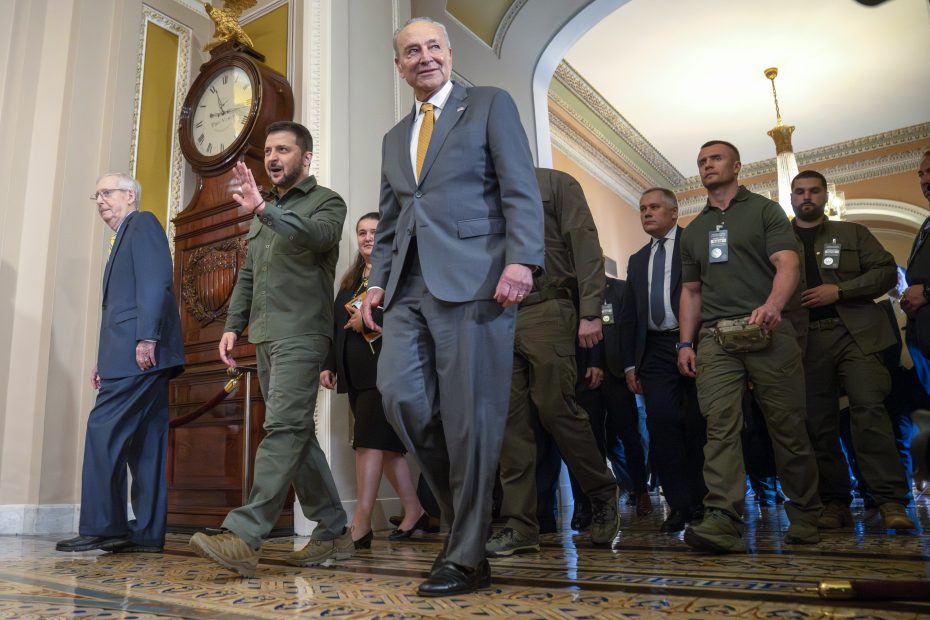
As Conflicts Rage Abroad, A Fractured Congress Tries To Rally Support For Historic Global Challenges
With support for Ukraine slipping in Congress, the United States is once again struggling to assert its role in the world.

With support for Ukraine slipping in Congress, the United States is once again struggling to assert its role in the world.

The appeals court’s role in the dispute is center stage after the Supreme Court rejected a request from Jack Smith to fast-track a decision on the immunity question.
What’s the point, now,
of crying, when you’ve cried
already, he said, as if he’d
never thought, or been told—
and perhaps he hadn’t—
Write down something
that doesn’t have to matter,
that still matters,
to you. Though I didn’t
know it then, those indeed
were the days.

Across the Northeast, forests are haunted by the ghosts of American giants. A little more than a century ago, these woods brimmed with American chestnuts—stately Goliaths that could grow as high as 130 feet tall and more than 10 feet wide. Nicknamed “the redwoods of the East,” some 4 billion American chestnuts dotted the United States’ eastern flank, stretching from the misty coasts of Maine down into the thick humidity of Appalachia.

The Washington, D.C., my sisters and I grew up in was known as Chocolate City for good reason. As Black children in the city then, we were a majority. We sauntered from school to store to home to kickball field, oblivious to our segregation. When I was a tween, and just beginning to be conscious about the giving of gifts, my sisters and I were Christmas shopping at one of the festive pop-up markets in our corner of the city.

This is an edition of The Atlantic Daily, a newsletter that guides you through the biggest stories of the day, helps you discover new ideas, and recommends the best in culture. Sign up for it here.Many of the stories our readers spent time with this year revealed a curiosity about the historical events that shaped current circumstances at home and abroad, and a desire to examine humanity’s best and worst impulses. Spend some of your Sunday with 12 don’t-miss stories of the past year.

The sooner President Joe Biden acknowledges that Americans will likely be drawn into a fight to protect shipping traffic through the Suez Canal, the more time the U.S. military has to plan, and the less severe the harm will be to the global economy.
According to HHS, nine states are responsible for 60 percent of children’s coverage losses between March and September.
“We don’t believe those rights should be subjected to majority vote.
The additional doses come amid shortages that have left parents and providers scrambling for shots.
Former Trump confidante Kellyanne Conway and other strategists are citing poll data showing strong demand among GOP voters for birth control after the fall of Roe.

The Texas Supreme Court subsequently ruled against her.

The party has $7.6 million heading into 2024, barely a tenth of what it had at the start of 2020 after accounting for inflation and creating anxiety among members.
Friday’s report from the Labor Department showed that the unemployment rate dropped from 3.9% to 3.7%, not far above a five-decade low of 3.4% in April.

Expiring Covid benefits and new limits on safety net programs threaten to hit Americans’ pocketbooks — especially among core parts of the Democratic electorate.

Top White House aides reviewed private polling showing Biden’s economic message falling flat and suggesting paths toward a turnaround.

Can Democrats overcome their college-campus branding and reclaim the working class?
Sônia Guajajara is Brazil’s first Indigenous cabinet minister and the country’s first-ever minister of Indigenous peoples. We recently sat down with Guajajara at the COP28 summit in Dubai to discuss the role of Indigenous communities in the rapidly developing climate crisis. She discussed her work within the administration of Brazilian President Lula to stop Amazon rainforest deforestation and to wrest back Indigenous governance from extractive industry.

The United Nations Security Council is expected to vote today on a watered-down resolution on aid to Gaza. Though the resolution originally called for an immediate ceasefire, the United States repeatedly pushed for the vote to be delayed and the resolution’s language weakened before agreeing to support it. In the meantime, the death toll in Gaza has surpassed 20,000, while an additional 500,000 now face hunger and starvation.
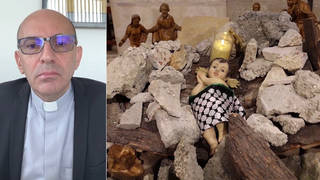
In “mourning and honor” of Palestinians killed in Gaza, the city of Bethlehem in the occupied West Bank, the birthplace of Jesus Christ, has announced the cancellation of traditional Christmas festivities. In Bethlehem, we’re joined by the president of Dar al-Kalima University, Reverend Mitri Raheb. Reverend Raheb relates the story of Jesus, a refugee whose mother had no place to safely give birth, to the plight of displaced Gazans facing a dearth of medical care.

As the 2024 presidential election campaign heats up, Republican front-runner Donald Trump is escalating his racist rhetoric, repeatedly saying in recent days that immigrants are “poisoning the blood of our country,” drawing comparisons to Hitler. Journalist Jeff Sharlet says, “Even more important than the substance is the spectacle, the drama, that makes him the exciting and, in fascist terms, the man of action.

The former White House communications director explained why his ex-boss “knows exactly what he’s doing” with his anti-immigrant remarks.
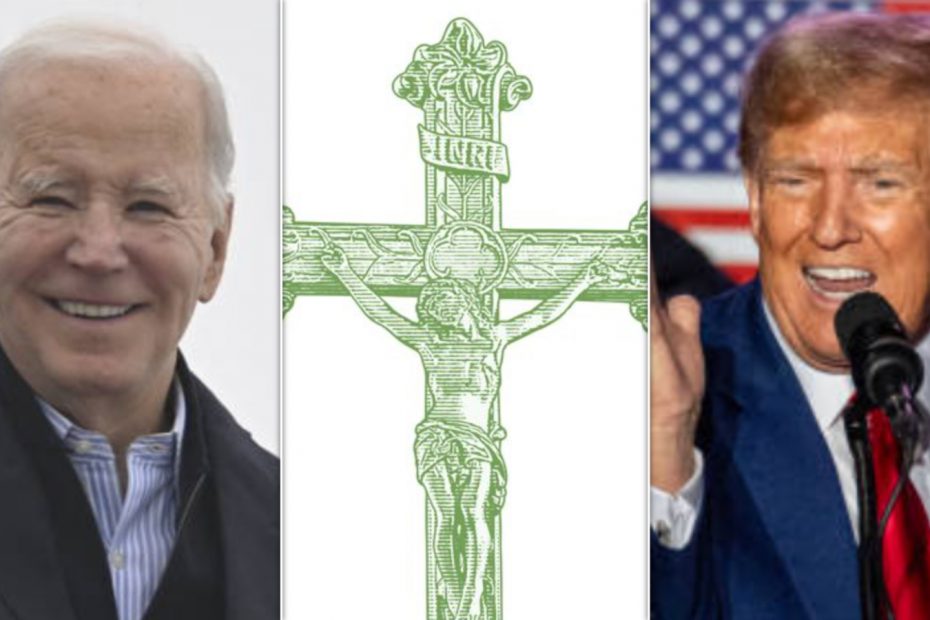
The former president hurled some unholy accusations at the Catholic incumbent in a Truth Social video.
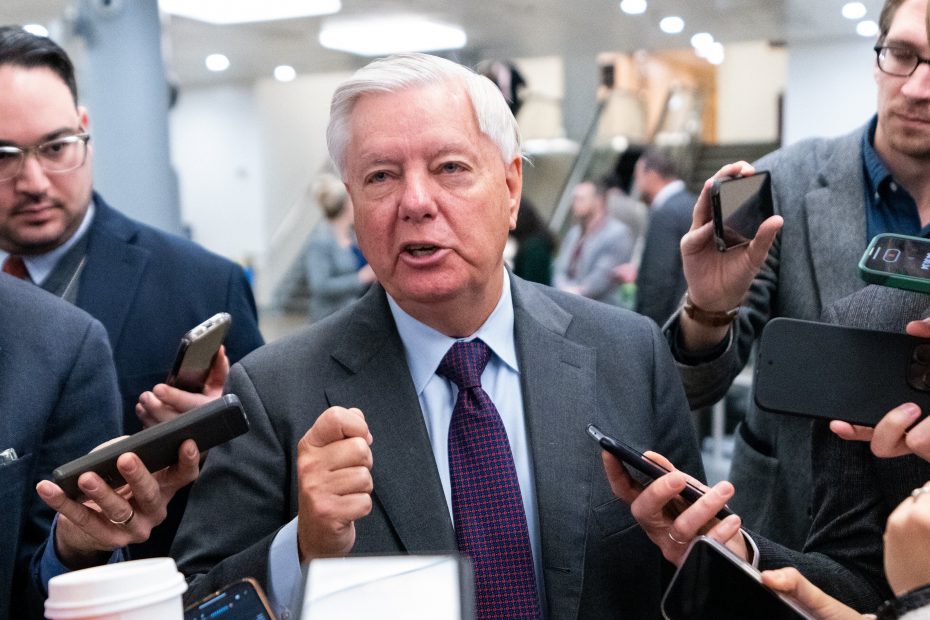
The South Carolina senator hit midtown Manhattan to wage his bizarre battle on behalf of the fast food chain.

This is an edition of The Wonder Reader, a newsletter in which our editors recommend a set of stories to spark your curiosity and fill you with delight. Sign up here to get it every Saturday morning.The question “What is a Christmas movie?” might seem straightforward. But there’s one film that has scrambled the logic of the holiday movie for years now—at least for those who probably spend too much time online.

Leo Tolstoy’s observation in Anna Karenina is famous to the point of becoming a cliché: “All happy families are alike; each unhappy family is unhappy in its own way.” But it wouldn’t have become a truism if it didn’t resonate—whether or not you agree with the first part, the second half is inarguably a fact.

The wind washed over the rows of white tombstones and carried the last leaves of autumn on its breath. I held the map of Arlington National Cemetery up to my face, clinging to its edges as its corners fluttered. I looked up, and saw the statue I was searching for in the distance, encircled by tall steel fencing that caught and held the light from the afternoon sun.
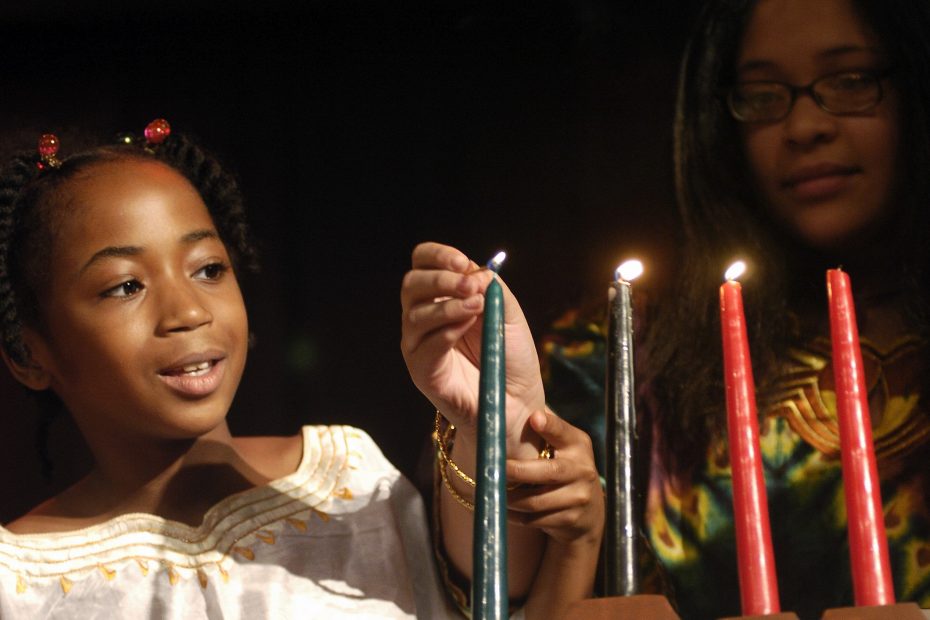
For a few years of my childhood, Kwanzaa was a big deal. I recall attending three Kwanzaa celebrations hosted by Mt. Lebanon Baptist Church in Baltimore. My cousin Olivia Moyd Hazell, at the time the church’s director of Christian education, organized them. About 50 church members and friends, many wearing kente cloth, would file into a softly lit basement the weekend after Christmas.
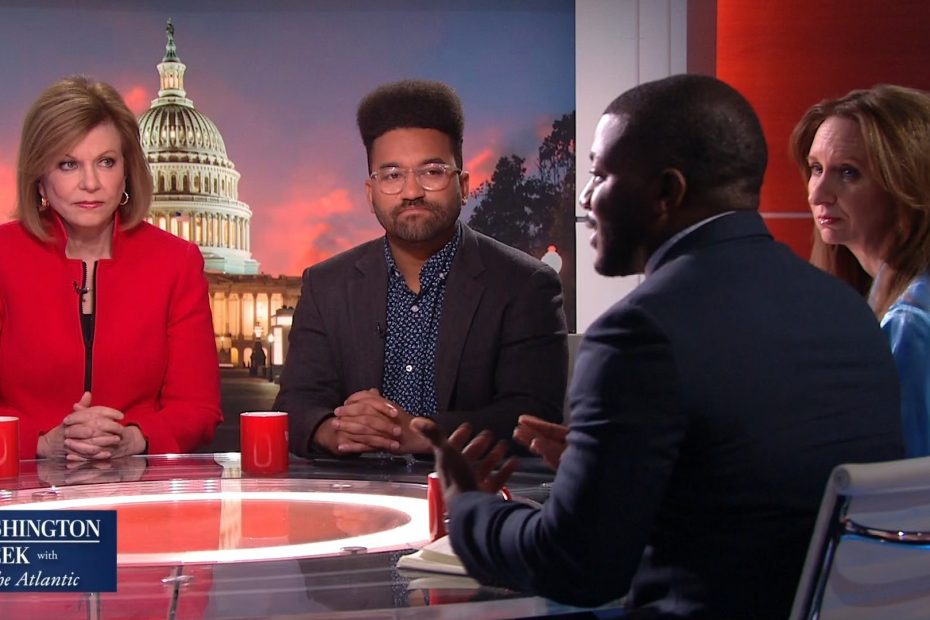
Editor’s Note: Washington Week With The Atlantic is a partnership between NewsHour Productions, WETA, and The Atlantic airing every Friday on PBS stations nationwide. Check your local listings or watch full episodes here. On Tuesday, Colorado’s Supreme Court disqualified Donald Trump from the state’s primary ballot after determining that his actions on January 6, 2021, made him ineligible under the U.S. Constitution’s insurrection clause.
According to HHS, nine states are responsible for 60 percent of children’s coverage losses between March and September.