Today's Liberal News

Contributing Writers

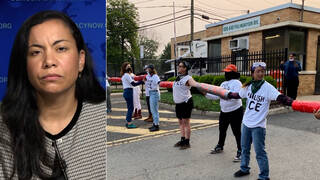
“Backtalker”: Kimberlé Crenshaw on New Memoir, Voting Rights, Critical Race Theory & Clarence Thomas

Leading scholar in the field of critical race theory Kimberlé Crenshaw coined the term “intersectionality,” which she has described as a “lens through which you can see where power comes and collides, where it interlocks and intersects.” Crenshaw, a professor of law at UCLA and Columbia University and executive director of the African American Policy Forum, has just published a new book, Backtalker: An American Memoir.

Israel’s Destruction of Southern Lebanon Turns Villages into “Moonscapes”: Reporter Lylla Younes

The Israeli military issued new evacuation orders in southern Lebanon on Wednesday, warning residents of 12 towns and villages, including some north of the Litani River — beyond its current zone of occupation — to leave their homes. Those warnings were followed by reports of airstrikes in the south.
Israel and Hezbollah agreed to a fragile temporary ceasefire in mid-April that has since been extended, but fighting has continued at a lesser scale.

Global Press Freedom Hits Record Low, U.S. Drops to 64th in the World: Reporters Without Borders

Reporters Without Borders warns press freedom has fallen to its lowest level since the group began publishing its annual World Press Freedom Index in 2002. The index has charted how press freedoms have deteriorated in the United States and elsewhere over the past 25 years. The U.S. was ranked 17th in the world in 2002. In the latest index, the U.S. is down to 64th, falling seven places since last year.

Trita Parsi on Iran War: Trump Still “Looking for a Silver Bullet” Instead of Negotiating Seriously

We discuss the ongoing crisis in the Strait of Hormuz with the Quincy Institute for Responsible Statecraft’s Trita Parsi. U.S. officials are denying Iranian reports that a U.S. vessel was struck by Iranian missiles amid the two countries’ dual blockade of the strait. The warring nations still say they are observing a fragile temporary ceasefire as negotiations continue for a possible longer-term deal.

Public Access TV at Risk: Cable Giants Threaten to Cut Funds for Local Stations Across U.S.

As more people cut the cord and drop their cable TV subscriptions, public access channels are losing a vital source of revenue. For decades, cable television companies have paid franchise fees to local municipalities as compensation for use of the public right of way, through which the companies route cables and utilities. Those fees have funded local stations focused on public, educational, and governmental access programming.

“Assault on the First Amendment”: Dem. FCC Commissioner on Megamergers & Trump Targeting Kimmel, ABC

As President Trump continues to attack media organizations and journalists, we speak with a sitting member of the Federal Communications Commission about how the administration has weaponized the FCC to go after his perceived enemies in the media. Anna Gomez is the sole Democratic commissioner on the FCC, which is currently operating with just three commissioners instead of the usual five.

Trump’s War on Iran & Strait of Hormuz Crisis Reveal “Limits of American Imperial Power”

We speak with Middle East history professor Toby Jones about the ongoing crisis in the Strait of Hormuz, where overlapping blockades by Iran and the United States have disrupted shipping and the wider global economy since the start of the war in late February. Jones says this latest conflict is part of a decadeslong project by the United States to exert imperial control over the oil-rich region, but that it’s now in danger of a strategic loss signaling a deeper imperial decline.

“A People’s History of Invisible India”: Journalist Neha Dixit on Dire State of Worker Rights

On International Workers’ Day, we take a look at the state of workers’ rights and freedoms in India, where pressure on fuel supplies from the U.S.-Israeli war on Iran has deepened the cost-of-living crisis and labor unrest is on the rise. In mid-April, tens of thousands of workers from the industrial hubs around New Delhi blocked roads to demand a fair wage and better working conditions.

Trita Parsi on Iran War: Trump Still “Looking for a Silver Bullet” Instead of Negotiating Seriously

We discuss the ongoing crisis in the Strait of Hormuz with the Quincy Institute for Responsible Statecraft’s Trita Parsi. U.S. officials are denying Iranian reports that a U.S. vessel was struck by Iranian missiles amid the two countries’ dual blockade of the strait. The warring nations still say they are observing a fragile temporary ceasefire as negotiations continue for a possible longer-term deal.

Abortion Rights Movement Shifts to “Plan C” as Court Restricts Mifepristone by Mail

In a major blow to abortion access, a federal appeals court decision siding with the state of Louisiana has placed major restrictions on the abortion pill mifepristone. The medication, used in roughly two-thirds of all abortions in the U.S., can no longer be sent by mail or prescribed through telemedicine. But previous abortion restrictions show that curtailing access doesn’t reduce the prevalence of abortions. Instead, they make the procedure more dangerous, and even deadly.

“A People’s History of Invisible India”: Journalist Neha Dixit on Dire State of Worker Rights

On International Workers’ Day, we take a look at the state of workers’ rights and freedoms in India, where pressure on fuel supplies from the U.S.-Israeli war on Iran has deepened the cost-of-living crisis and labor unrest is on the rise. In mid-April, tens of thousands of workers from the industrial hubs around New Delhi blocked roads to demand a fair wage and better working conditions.

“No School, No Work, No Shopping”: Workers, Immigrants to Lead Thousands of May Day Protests

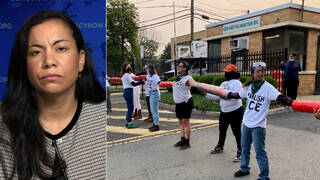
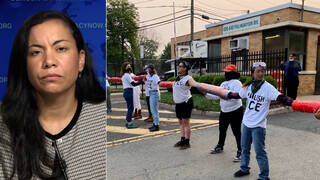
As workers around the world rally to mark May Day, International Workers’ Day, we speak with organizers in Los Angeles and Chicago. The May Day Strong coalition here in the United States says 3,000 protests and events are scheduled across the country with organizers calling for “no school, no work, no shopping.”
The largest May Day protest in Los Angeles is planned at MacArthur Park.

From Springfield, Ohio, to the Supreme Court: A Pastor’s Fight to Protect TPS for Haitians

The Supreme Court heard oral arguments this week on President Trump’s push to strip temporary protected status from 350,000 Haitians and 6,100 Syrians living in the United States. The TPS program grants protection from deportation and work authorization to immigrants whose home countries are deemed unsafe to return to, most often because of war or natural disaster. The case could ultimately have ramifications for more than 1 million TPS holders from over a dozen countries.

Sunlight Doesn’t Go Through the Strait of Hormuz: Bill McKibben on Iran Oil Shock & Green Transition

We speak with author and activist Bill McKibben about the worsening climate crisis and why the world must rapidly transition to renewable energy in order to stave off the worst impacts. He says the Iran war has exposed the “utter folly” of fossil fuel dependence. “Sunlight has to travel 93 million miles to reach the Earth, but none of those miles go through the Strait of Hormuz,” says McKibben.

“A People’s History of Invisible India”: Journalist Neha Dixit on Dire State of Worker Rights

On International Workers’ Day, we take a look at the state of workers’ rights and freedoms in India, where pressure on fuel supplies from the U.S.-Israeli war on Iran has deepened the cost-of-living crisis and labor unrest is on the rise. In mid-April, tens of thousands of workers from the industrial hubs around New Delhi blocked roads to demand a fair wage and better working conditions.

“No School, No Work, No Shopping”: Workers, Immigrants to Lead Thousands of May Day Protests

As workers around the world rally to mark May Day, International Workers’ Day, we speak with organizers in Los Angeles and Chicago. The May Day Strong coalition here in the United States says 3,000 protests and events are scheduled across the country with organizers calling for “no school, no work, no shopping.”
The largest May Day protest in Los Angeles is planned at MacArthur Park.

From Springfield, Ohio, to the Supreme Court: A Pastor’s Fight to Protect TPS for Haitians

The Supreme Court heard oral arguments this week on President Trump’s push to strip temporary protected status from 350,000 Haitians and 6,100 Syrians living in the United States. The TPS program grants protection from deportation and work authorization to immigrants whose home countries are deemed unsafe to return to, most often because of war or natural disaster. The case could ultimately have ramifications for more than 1 million TPS holders from over a dozen countries.

Sunlight Doesn’t Go Through the Strait of Hormuz: Bill McKibben on Iran Oil Shock & Green Transition

We speak with author and activist Bill McKibben about the worsening climate crisis and why the world must rapidly transition to renewable energy in order to stave off the worst impacts. He says the Iran war has exposed the “utter folly” of fossil fuel dependence. “Sunlight has to travel 93 million miles to reach the Earth, but none of those miles go through the Strait of Hormuz,” says McKibben.

How the Iran War May Play a Role in the Midterms

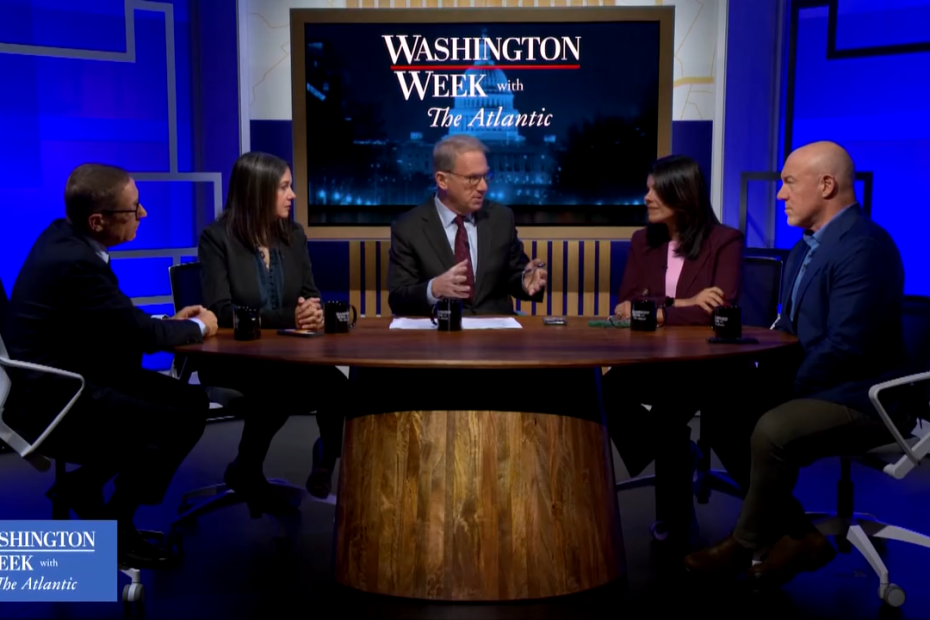
Editor’s Note: Washington Week With The Atlantic is a partnership between NewsHour Productions, WETA, and The Atlantic airing every Friday on PBS stations nationwide. Check your local listings, watch full episodes here, or listen to the weekly podcast here.
Fallout from the war in Iran may play a role in the midterm elections, particularly when it comes to the economy. Panelists on Washington Week With The Atlantic joined last night to discuss this, and more.

Sunlight Doesn’t Go Through the Strait of Hormuz: Bill McKibben on Iran Oil Shock & Green Transition

We speak with author and activist Bill McKibben about the worsening climate crisis and why the world must rapidly transition to renewable energy in order to stave off the worst impacts. He says the Iran war has exposed the “utter folly” of fossil fuel dependence. “Sunlight has to travel 93 million miles to reach the Earth, but none of those miles go through the Strait of Hormuz,” says McKibben.

“A People’s History of Invisible India”: Journalist Neha Dixit on Dire State of Worker Rights

On International Workers’ Day, we take a look at the state of workers’ rights and freedoms in India, where pressure on fuel supplies from the U.S.-Israeli war on Iran has deepened the cost-of-living crisis and labor unrest is on the rise. In mid-April, tens of thousands of workers from the industrial hubs around New Delhi blocked roads to demand a fair wage and better working conditions.

“No School, No Work, No Shopping”: Workers, Immigrants to Lead Thousands of May Day Protests

As workers around the world rally to mark May Day, International Workers’ Day, we speak with organizers in Los Angeles and Chicago. The May Day Strong coalition here in the United States says 3,000 protests and events are scheduled across the country with organizers calling for “no school, no work, no shopping.”
The largest May Day protest in Los Angeles is planned at MacArthur Park.

From Springfield, Ohio, to the Supreme Court: A Pastor’s Fight to Protect TPS for Haitians

The Supreme Court heard oral arguments this week on President Trump’s push to strip temporary protected status from 350,000 Haitians and 6,100 Syrians living in the United States. The TPS program grants protection from deportation and work authorization to immigrants whose home countries are deemed unsafe to return to, most often because of war or natural disaster. The case could ultimately have ramifications for more than 1 million TPS holders from over a dozen countries.

Sunlight Doesn’t Go Through the Strait of Hormuz: Bill McKibben on Iran Oil Shock & Green Transition

We speak with author and activist Bill McKibben about the worsening climate crisis and why the world must rapidly transition to renewable energy in order to stave off the worst impacts. He says the Iran war has exposed the “utter folly” of fossil fuel dependence. “Sunlight has to travel 93 million miles to reach the Earth, but none of those miles go through the Strait of Hormuz,” says McKibben.

Maya Wiley: Southern Poverty Law Center Indictment Is Part of Trump’s Broader Attack on Civil Rights

Attorney and civil rights activist Maya Wiley responds to the Justice Department’s fraud case against the Southern Poverty Law Center, which centers on the group’s history of paying individuals to infiltrate white supremacist groups in order to monitor their activities. The SPLC has rejected the charges as politically motivated, saying its informant program was used to monitor threats of violence and that the information gathered was routinely shared with local and federal law enforcement.

Supreme Court Guts Voting Rights Act in “Devastating Blow” to Democracy & Civil Rights: Maya Wiley

The U.S. Supreme Court has effectively gutted Section 2 of the Voting Rights Act, the last remaining major provision of the landmark 1965 law that was a crowning achievement of the civil rights movement.
In a 6-3 decision along partisan lines, a majority of justices ruled Wednesday that Louisiana must redraw a congressional map that was designed to create a second majority-Black district in the state, where African Americans have long faced racial segregation and barriers to voting.

“We Are Bombarding America’s Forests with Roundup”: Despite Cancer Fear, Trump Admin Pushes Herbicide

The U.S. Supreme Court heard arguments Monday in a case that could determine whether thousands of cancer patients can keep suing the manufacturers of the popular weed killer glyphosate, known as Roundup. Critics of Roundup have long alleged a link between the herbicide and cancer. It was developed by Monsanto, which was bought by Bayer in 2018.
Mother Jones and the Center for Investigative Reporting recently released a major investigation by Nate Halverson that looks at how the U.S.