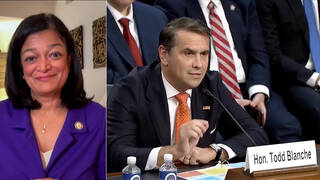
‘He’s got a lot of stamina’: What to watch as the RFK Jr. hearing palooza kicks off
Health Secretary Robert F. Kennedy Jr. will make the case for the Trump budget. Democrats will test his political acumen.
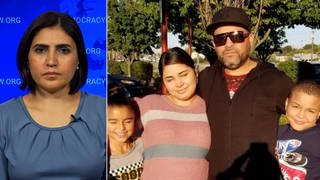
Maoz Inon’s parents were killed in the October 7 attacks in 2023. Aziz Abu Sarah’s brother died after being tortured in an Israeli prison. The two have closely worked together calling for peace in Israel and Palestine over the past two years. They just released a book titled The Future Is Peace: A Shared Journey Across the Holy Land.
“I grew up angry. I grew up believing peace is impossible. But at some point, I realized — when I was 18 — that Maoz and I are not on the opposite side.
Democratic Congressmember Eric Swalwell of California and Republican Tony Gonzales of Texas resigned Tuesday. Both of them faced potential expulsion votes after they were accused of sexual misconduct involving former staffers.
Swalwell’s resignation came just days after CNN and the San Francisco Chronicle reported multiple allegations against him, including twice raping a former staffer. Swalwell denied the allegations. He dropped out of the California gubernatorial race on Sunday.
Israeli forces continue to bombard towns in southern Lebanon today, according to Lebanese state media. Several people were killed in a strike on the coastal town of Ansariya. According to Lebanon’s Health Ministry, Israeli attacks have killed over 2,100 people, wounding nearly 7,000. Over 1 million Lebanese have been displaced, and 40,000 homes have been destroyed or heavily damaged. We go to Beirut, where we’re joined by investigative journalist Lylla Younes.
U.S. Secretary of State Marco Rubio hosted the first direct talks between Israel and Lebanon in decades on Tuesday in Washington. Hezbollah, which was not a party to the talks, made clear it will not abide by any agreement that results from their negotiations.
Israel’s demand that Hezbollah be disarmed is “anything but reasonable,” says Daniel Levy, former Israeli peace negotiator under Prime Ministers Ehud Barak and Yitzhak Rabin.
The federal government is preparing to begin automatically registering eligible U.S. men ages 18 to 26 for the military draft pool. The U.S. hasn’t had a military draft since 1973, but it still maintains a registry of eligible men in case the draft is restored. New rules around automatic military draft registration were tucked into the 2026 National Defense Authorization Act.
The Trump administration has fired six more immigration judges in its effort to reshape immigration policy and the immigration courts. Two of the fired judges, Roopal Patel and Nina Froes, had each dismissed high-profile cases brought by the government against international students who had advocated for Palestinian rights, Rümeysa Öztürk and Mohsen Mahdawi. Around 100 immigration judges have been fired by the Trump administration. Firings in previous administrations were rare.
The first-ever pope from the United States is clashing with the White House. Pope Leo XIV, head of the Catholic Church, which counts more than a billion people in the world as its members, has spoken out forcefully against war. He said in his Palm Sunday address that Jesus “does not listen to the prayers of those who wage war … [whose] hands are full of blood.” In response, President Donald Trump said Pope Leo is “weak on crime, and terrible for foreign policy.
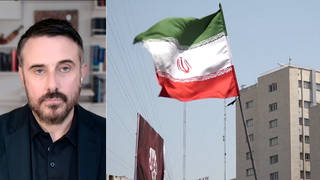
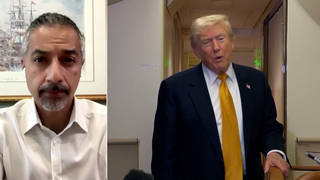
After the first round of ceasefire negotiations in Pakistan collapsed over the weekend, we speak to two former nuclear negotiators about prospects for ending the ongoing U.S.-Israeli war on Iran, including what another nuclear deal might look like. Robert Malley, a U.S. negotiator for the 2015 nuclear deal (which President Trump withdrew from in his first term), says Trump’s “mercurial” behavior makes it difficult to predict his objectives and the course of any future talks.
The federal government is preparing to begin automatically registering eligible U.S. men ages 18 to 26 for the military draft pool. The U.S. hasn’t had a military draft since 1973, but it still maintains a registry of eligible men in case the draft is restored. New rules around automatic military draft registration were tucked into the 2026 National Defense Authorization Act.
The Trump administration has fired six more immigration judges in its effort to reshape immigration policy and the immigration courts. Two of the fired judges, Roopal Patel and Nina Froes, had each dismissed high-profile cases brought by the government against international students who had advocated for Palestinian rights, Rümeysa Öztürk and Mohsen Mahdawi. Around 100 immigration judges have been fired by the Trump administration. Firings in previous administrations were rare.
Official election results in Hungary show Péter Magyar and his opposition Tisza party won Sunday’s parliamentary election in a landslide, with more than the two-thirds majority needed to amend Hungary’s constitution. Hungary’s far-right Viktor Orbán has been prime minister of the country since 2010, making him the European Union’s longest-serving leader. His campaign was supported by Russian President Vladimir Putin and the Trump administration.
Ship traffic has been halted again in the Strait of Hormuz after President Trump ordered the U.S. military to begin a naval blockade of all Iranian ports and coastal areas starting Monday at 10 a.m. ET. Iran denounced Trump’s move as an illegal act amounting to “piracy” and has threatened to strike Gulf ports in retaliation. Trump ordered the blockade after the U.S. and Iran failed to reach a deal to end the war following 21 hours of talks in Islamabad, Pakistan.
Amid strains in U.S.-European relations, the Trump administration has worked to strengthen ties with Hungary and its far-right leader, Prime Minister Viktor Orbán, who is facing his biggest challenge in 16 years. With just days to go before parliamentary elections, Orbán’s Fidesz party is trailing the center-right pro-EU Tisza party led by Péter Magyar. U.S. Vice President JD Vance traveled to Budapest this week and appeared alongside Orbán to openly campaign for his reelection.
The U.S.-Israeli war on Iran has deepened rifts with several European countries. The Spanish government has been most outspoken in its opposition to the war, and U.S. allies like Germany and the United Kingdom have voiced some criticism while providing logistical support for the assault on Iran. NATO Secretary General Mark Rutte has tried to smooth over differences and placate President Trump, even as he has mused about pulling the U.S.
As the United States and Iran prepare to hold talks in Pakistan aimed at ending the war, Israel is continuing to bomb Lebanon, where the death toll from Wednesday’s massive wave of attacks has topped 300.
“It was 10 minutes of terror, a day that the Lebanese are calling Black Wednesday,” says Lebanese Australian journalist Rania Abouzeid, speaking with Democracy Now! from Beirut.
As Iran destroyed energy facilities and infrastructure in all six of its Persian Gulf neighbors and blocks their shipments of oil through the Strait of Hormuz, the Gulf states — Saudi Arabia, Kuwait, Bahrain, Qatar, Oman and the United Arab Emirates — are reevaluating their strategic alliances with the United States.
Amid strains in U.S.-European relations, the Trump administration has worked to strengthen ties with Hungary and its far-right leader, Prime Minister Viktor Orbán, who is facing his biggest challenge in 16 years. With just days to go before parliamentary elections, Orbán’s Fidesz party is trailing the center-right pro-EU Tisza party led by Péter Magyar. U.S. Vice President JD Vance traveled to Budapest this week and appeared alongside Orbán to openly campaign for his reelection.
The U.S.-Israeli war on Iran has deepened rifts with several European countries. The Spanish government has been most outspoken in its opposition to the war, and U.S. allies like Germany and the United Kingdom have voiced some criticism while providing logistical support for the assault on Iran. NATO Secretary General Mark Rutte has tried to smooth over differences and placate President Trump, even as he has mused about pulling the U.S.
As the United States and Iran prepare to hold talks in Pakistan aimed at ending the war, Israel is continuing to bomb Lebanon, where the death toll from Wednesday’s massive wave of attacks has topped 300.
“It was 10 minutes of terror, a day that the Lebanese are calling Black Wednesday,” says Lebanese Australian journalist Rania Abouzeid, speaking with Democracy Now! from Beirut.
As Iran destroyed energy facilities and infrastructure in all six of its Persian Gulf neighbors and blocks their shipments of oil through the Strait of Hormuz, the Gulf states — Saudi Arabia, Kuwait, Bahrain, Qatar, Oman and the United Arab Emirates — are reevaluating their strategic alliances with the United States.
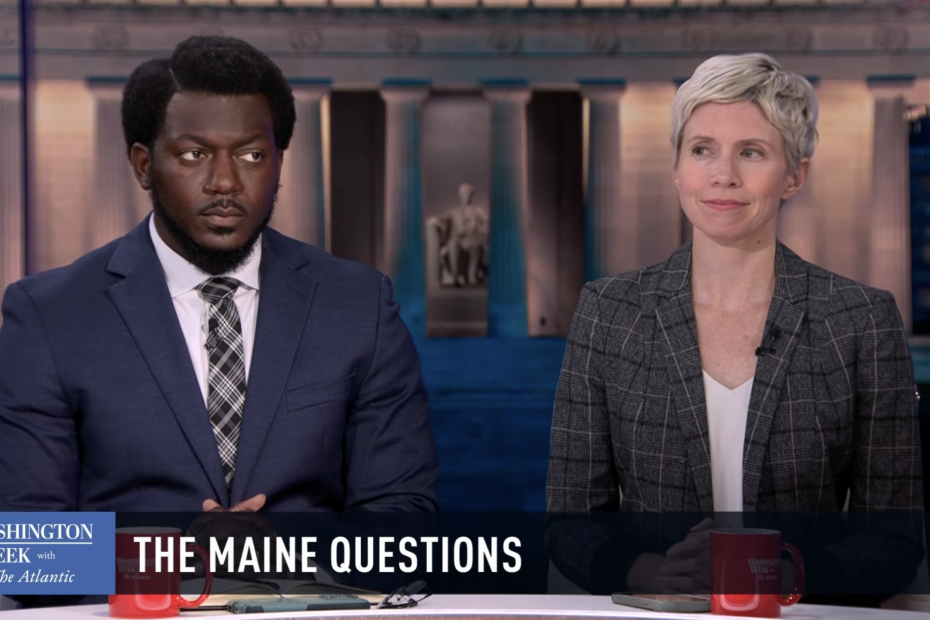
Editor’s Note: Panelists on Washington Week With The Atlantic joined to discuss growing opposition to President Trump’s attacks on Iran and what winning a war with unclear objectives could like.
President Trump’s war in Iran is putting economic pressure on many European countries. On Washington Week With The Atlantic, panelists joined to discuss the effects of the conflict on America’s allies, and more.
“It’s a very strange moment because, on the one hand, actually, U.S.
As Iran destroyed energy facilities and infrastructure in all six of its Persian Gulf neighbors and blocks their shipments of oil through the Strait of Hormuz, the Gulf states — Saudi Arabia, Kuwait, Bahrain, Qatar, Oman and the United Arab Emirates — are reevaluating their strategic alliances with the United States.
Amid strains in U.S.-European relations, the Trump administration has worked to strengthen ties with Hungary and its far-right leader, Prime Minister Viktor Orbán, who is facing his biggest challenge in 16 years. With just days to go before parliamentary elections, Orbán’s Fidesz party is trailing the center-right pro-EU Tisza party led by Péter Magyar. U.S. Vice President JD Vance traveled to Budapest this week and appeared alongside Orbán to openly campaign for his reelection.
The U.S.-Israeli war on Iran has deepened rifts with several European countries. The Spanish government has been most outspoken in its opposition to the war, and U.S. allies like Germany and the United Kingdom have voiced some criticism while providing logistical support for the assault on Iran. NATO Secretary General Mark Rutte has tried to smooth over differences and placate President Trump, even as he has mused about pulling the U.S.
As the United States and Iran prepare to hold talks in Pakistan aimed at ending the war, Israel is continuing to bomb Lebanon, where the death toll from Wednesday’s massive wave of attacks has topped 300.
“It was 10 minutes of terror, a day that the Lebanese are calling Black Wednesday,” says Lebanese Australian journalist Rania Abouzeid, speaking with Democracy Now! from Beirut.
Amy Goodman, along with co-host Juan González and Pacifica Radio, launched Democracy Now! on WBAI 30 years ago as the only daily election show in public broadcasting. It grew from nine community radio stations to television, as well, the week of the 9/11 attacks in 2001. There’s a new documentary about Amy and Democracy Now! called Steal This Story, Please! We speak with the film’s Oscar-nominated directors Carl Deal and Tia Lessin.
As Iran destroyed energy facilities and infrastructure in all six of its Persian Gulf neighbors and blocks their shipments of oil through the Strait of Hormuz, the Gulf states — Saudi Arabia, Kuwait, Bahrain, Qatar, Oman and the United Arab Emirates — are reevaluating their strategic alliances with the United States.
Will Iran join China, Russia and the United States as a fourth major power on the world stage? Iran’s resilience in the face of the U.S.-Israeli war is already shifting the global balance of power, says American political scientist Robert Pape. “What you are seeing with Iran is that its geography, in combination with a level of drone technology that we simply cannot destroy,” is demonstrating to other countries that they may not have to stay beholden to U.S. hegemony.
On April 8, less than one day after the Trump administration agreed to a two-week ceasefire deal with Iran, Israel struck Lebanon in its heaviest and deadliest attack on the country since the U.S.-Israeli war on Iran began. At least 250 deaths have been reported. Israeli and U.S. authorities are insisting that the ceasefire proposal did not include Lebanon, where Israel says it is targeting Hezbollah.