
The Limits of Trump’s Midterm Trickery
For the first time in modern American history, a sitting president is seeking to wield the force of the state to secure an electoral victory for his party.
For the first time in modern American history, a sitting president is seeking to wield the force of the state to secure an electoral victory for his party.
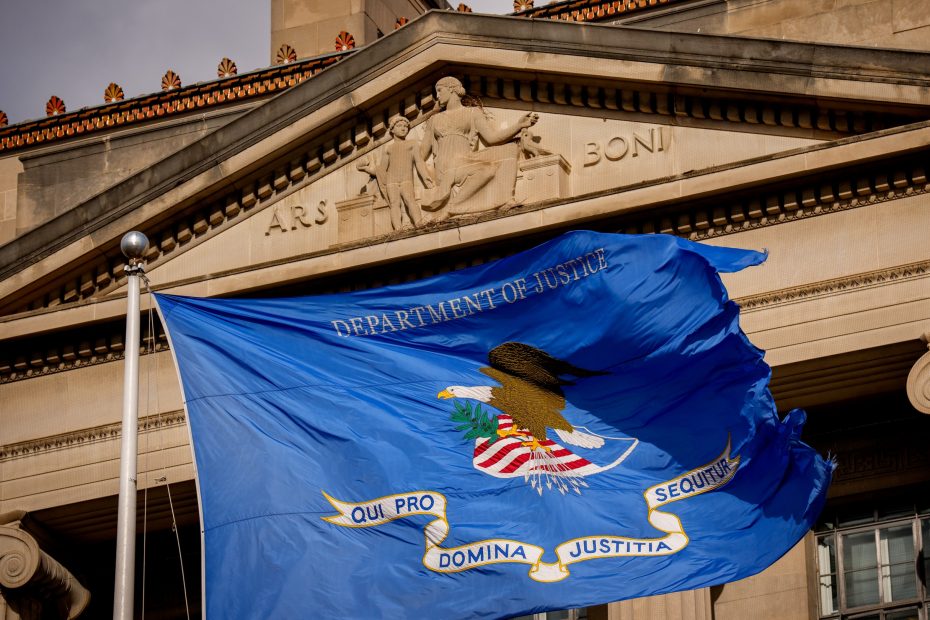
Not too long ago, the Department of Justice could generally be trusted to prosecute cases in which lawyers believed that real wrongdoing had occurred. Now DOJ frequently unveils lawsuits that seem designed mostly for securing likes and reposts on right-wing social media—the actual facts be damned. Any high-profile criminal case brought by the Trump administration arrives with an air of suspicion.
Today, Jeanine Pirro, the top federal prosecutor for Washington, D.C.
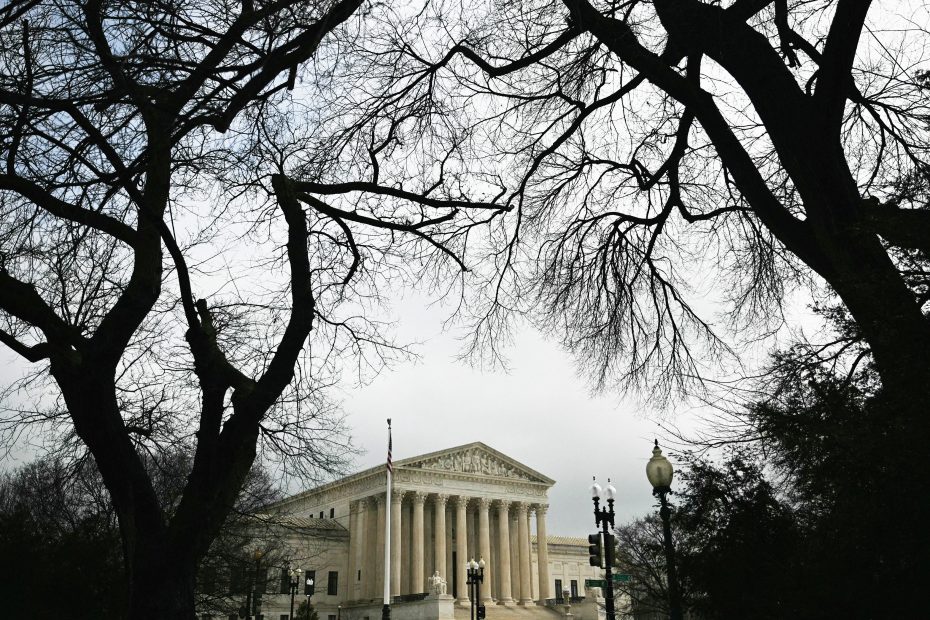
Neither snow, nor rain, nor heat, nor gloom of night, nor Donald Trump will stop the United States Postal Service from delivering mail-in ballots in the coming midterm elections. Tonight, the Supreme Court handed down an emergency ruling blocking the Trump administration from implementing a new policy that would have made mail-in voting so onerous as to be effectively impossible for election officials to administer.

The sight of military troops patrolling in a peaceful American city would once have been strange, if not outright alarming. But since last August, when Donald Trump first deployed the National Guard to Washington, D.C., residents have become accustomed to seeing men and women in camouflage military fatigues on duty throughout the city and its public-transit system. Sometimes, they trail federal officers from agencies such as the FBI and U.S.

This article was featured in the One Story to Read Today newsletter. Sign up for it here.
The day that Donald Trump swore his second oath of office, he signed an executive order demanding “accountability for the previous administration’s weaponization of the Federal Government against the American people.

Throughout his first term, Donald Trump serially fired and replaced members of his Cabinet as they displeased him. In his second, he seemed to be trying to break this pattern—keeping top aides even after their missteps and humiliations that would have sunk careers in any other administration. But now the president is back to his old ways. Last month, he fired Homeland Security Secretary Kristi Noem. Today, he announced the departure of Attorney General Pam Bondi.

As the Supreme Court heard oral arguments today about birthright citizenship, Donald Trump was watching from the courtroom—an apparent first for a sitting president. He listened silently as the justices pelted skeptical questions at Solicitor General John Sauer, who tried to defend a Trump executive order purporting to deny citizenship to the U.S.-born children of certain immigrants.

The Trump administration has made a habit of pressing criminal charges against Americans observing and protesting harsh immigration-enforcement tactics, using the power of the executive branch to intimidate and punish those who visibly dissent from the president’s political agenda. In many ways, the prosecution of LaMonica McIver is in line with this general approach.

The videos have become commonplace. Federal officers wearing masks and bulletproof vests subdue a moped driver in the middle of a busy D.C. street. A 70-year-old protester in Chicago is pushed to the ground by an armed Border Patrol agent holding a riot gun. In Los Angeles, an agent shoves away a demonstrator.
These videos capture the aggressive tactics of immigration officers under the second Trump administration. But they share something else, too.

This article was featured in the One Story to Read Today newsletter. Sign up for it here.
Throughout Donald Trump’s first term, his third campaign, and the first 10 months of his second term in office, he and his allies warned darkly of a “deep state” seeking to thwart his every move.

After Donald Trump’s win in 2024, commentators declared the so-called Resistance “dead” and “futile.” The opposition movement against Trump had been embarrassing, ineffective, a performative failure that did nothing “besides making the #Resisters feel good about themselves.” With the country now nine months into Trump’s second term, though, reports of the death of the Resistance turn out to have been exaggerated. The movement looks different than it did the last time around.

Throughout Donald Trump’s 2024 campaign for the presidency, he repeatedly indicated his desire to deploy National Guard troops into the “crime dens” of American cities and against the “enemy within.” This promise, at least, he has kept. Over the past four months, the president has sent the Guard into the streets of Los Angeles and the District of Columbia.

Three weeks into Donald Trump’s deployment of federal forces into Washington, D.C., the president announced on Truth Social that the capital had become a “CRIME FREE ZONE.” To hear the president tell it, the District—now patrolled by more than 2,200 members of the National Guard and federal law-enforcement officers from roughly 10 government agencies—has gone from hellscape to paradise. “People who haven’t gone out to dinner in Washington, D.C.

It’s rare for grand juries to refuse to indict. It’s even rarer for grand juries to refuse to indict multiple times in a single month—in significant part because prosecutors usually know better than to present shaky cases that might not gain jurors’ approval.
But Donald Trump’s desire to crack down on crime in Washington, D.C., seems to have come at the cost of that good judgment. Over the past month, federal prosecutors in D.C.

In the summer of 2020, as demonstrators gathered in Washington, D.C., to protest against the murder of George Floyd, President Donald Trump directed the National Guard and officers from various federal law-enforcement agencies to patrol the streets of the nation’s capital.

A clear pattern has emerged in the extended back-and-forth over the legality of many Trump-administration actions. Donald Trump or a member of his Cabinet takes a certain step—say, firing an official protected from such removal, or destroying a government agency established by Congress, or seeking to ship a group of immigrants off to a country where they may be tortured or killed. Then, a lawsuit is quickly filed seeking to block the administration.

Since early February, when Vice President J. D. Vance posted on X that “judges aren’t allowed to control the executive’s legitimate power,” the United States has been inching nearer and nearer to the moment when the White House directly defies an order of the court. So far, that moment doesn’t appear to have arrived—in part because the Trump administration can’t quite commit to its own authoritarian posturing.

Updated at 8:44 p.m. ET on April 9, 2025
Over the course of one afternoon and evening last month, the Department of Homeland Security loaded three planes with migrants, most of them Venezuelan men whom the Trump administration had determined, on the basis of little to no evidence, to be members of the gang Tren de Aragua. The planes departed Texas and flew across the Gulf of Mexico toward Central America, even as a judge in Washington, D.C., was holding a hearing on whether the U.S.
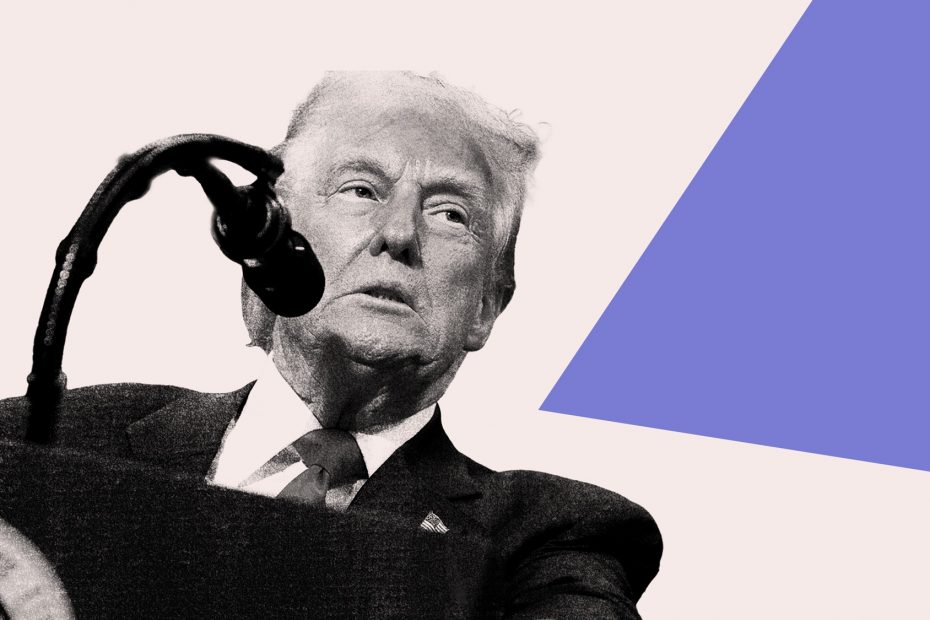
Less than a month into the second Trump administration, the White House began publicly toying with the idea of defying court orders. In the weeks since then, it’s continued to flirt with the suggestion, not ignoring a judge outright but pushing the boundaries of compliance by searching for loopholes in judicial demands and skirting orders for officials to testify.

Donald Trump wasted little time after the election in claiming an “unprecedented and powerful mandate” and floating a series of extreme proposals with varying degrees of legal dubiousness. The president-elect has already winkingly suggested that he might stay in office for an unconstitutional third term, indicated that he intends to end the Constitution’s guarantee of birthright citizenship, and said that he plans to deport U.S. citizens.

Matt Gaetz’s nomination to serve as attorney general lasted just more than a week. For Donald Trump to have selected him in the first place was shocking, not only because of Gaetz’s total lack of law-enforcement experience but also because, until recently, he had been under investigation for sex trafficking by the same department that he was now being tapped to lead.

What will happen if Donald Trump secures a second term as president? Polling remains close—and though a Democratic victory seems far more likely than it did before the Biden-Harris swap, it’s hardly assured. Should Trump pull out a win in November, voters might imagine that they know what to expect: more chaos, more grievance, more all-caps rants on social media. But a second Trump term would be much more dangerous than the first.

When the Supreme Court agreed to take up the question of whether Donald Trump is shielded from prosecution over his role in January 6, two core questions were at stake. First was the substantive matter of whether the Court would find that presidential immunity protected a former chief executive from some measure of criminal accountability for engineering an insurrection.

This article was featured in the One Story to Read Today newsletter. Sign up for it here.
One evening in March 2018, I joined some friends at a bar in Washington, D.C., to watch a live broadcast of Anderson Cooper’s interview with the adult-film actor Stormy Daniels on 60 Minutes.

Sign up for The Decision, a newsletter featuring our 2024 election coverage.
Updated at 6 pm ET on March 4, 2024.
The United States is in a moment of democratic crisis, and the Supreme Court has no idea what to do.
Today, the Court held in Trump v. Anderson that Colorado cannot disqualify Donald Trump from the state’s primary ballot as an insurrectionist, a decision that functionally dooms the existing efforts to bar Trump from the presidency under Section 3 of the Fourteenth Amendment.

Two things seemed clear after the Supreme Court heard oral arguments in Trump v. Anderson, the case concerning whether Section 3 of the Fourteenth Amendment bars Donald Trump from the presidency as an insurrectionist. First, most of the justices want to rule in Trump’s favor. Second, they’re struggling to figure out how to do so.

For months now, it has been apparent that Donald Trump might well become the first former president of the United States to be indicted. Now the once unthinkable has taken place. A grand jury in Manhattan has handed up an indictment of Donald Trump over his alleged coordination of hush-money payments in advance of the 2016 election. The indictment itself remains under seal.It wasn’t supposed to happen this way. For one thing, it wasn’t supposed to happen today.

Like the monster miraculously resuscitated to terrorize the heroes in a horror-movie sequel, Donald Trump is back.No, I’m not talking about his November 15 announcement of his third campaign for president of the United States. Instead I have in mind something far more important: Twitter.

The iron law of scandals involving Donald Trump is that they will always be stupid, and there will always be more of them. Trump scandals—the Russia investigation; Trump’s first impeachment, over his efforts to blackmail Ukrainian President Volodymyr Zelensky; the insurrection on January 6—have something else in common: All these catastrophes result from Trump’s refusal to divorce the office of the presidency and the good of the country from his personal desires.